Monday, December 3, 2018

Final Book Format

Final Book Format. 

To go along with the theme of reflections, I wanted to incorporate the main aspect that is used in most of my photos: windows.

For my final book, I will print out better prints again from a kiosk, and to bind them I will paste them in an organized fashion so that each photo will be laid against a window panel.

To visualize what I am trying to achieve, I will present the photos in a “window frame”, as shown below, where each photo is shown inside the panel frame. To actually create the window frame, I will use a window pane picture frame (can get on Amazon Prime). 


If I cannot find one that fits what I am looking for, I will make a window frame out of a single photo frame and clips, most likely the ones that have lights to go along with the light theme. 


Monday, November 26, 2018

Final Book Theme

Final Book Theme.


For my final project, I have decided to go along with the theme of photographing reflections with light, more specifically, a face in reflection in a window and using lighting from signs to capture different emotions and compositional outcomes. The reason I chose to go this route was because from Week 7, my compositionally stronger photos consisted of using reflections and different colored lighting to my advantage. I think my eye is drawn toward the use of light as a subject element, and reflections are fun for me to photograph. My idea to present the final project is to create a “window” using a clear glass/plastic box and spatially place them in the box to resemble “reflections”, where the similar ones are facing opposite each other. I hope to include small, different colored Christmas lights in the box to not only illuminate the photos, but to go along with the theme. It’s a very simple idea, but I think it represents the photos. 

This idea stems from these photos: 


Monday, November 5, 2018

Final Project Ideas

Final Project Ideas. 

For my final photo book, I have decided to focus on the "editorial" look, working on directing and setting up shots.

To go more in depth with a theme, I have decided to revolve around portraits and still lives that introduce playful color, focusing on youth and the freedoms of being a young adult living in NYC.
This can include expressing one's self by the way they dress, or their overall expressions in a "candid" moment. I think the photos that I am drawn to are the ones that express confidence, empowerment, and happiness.

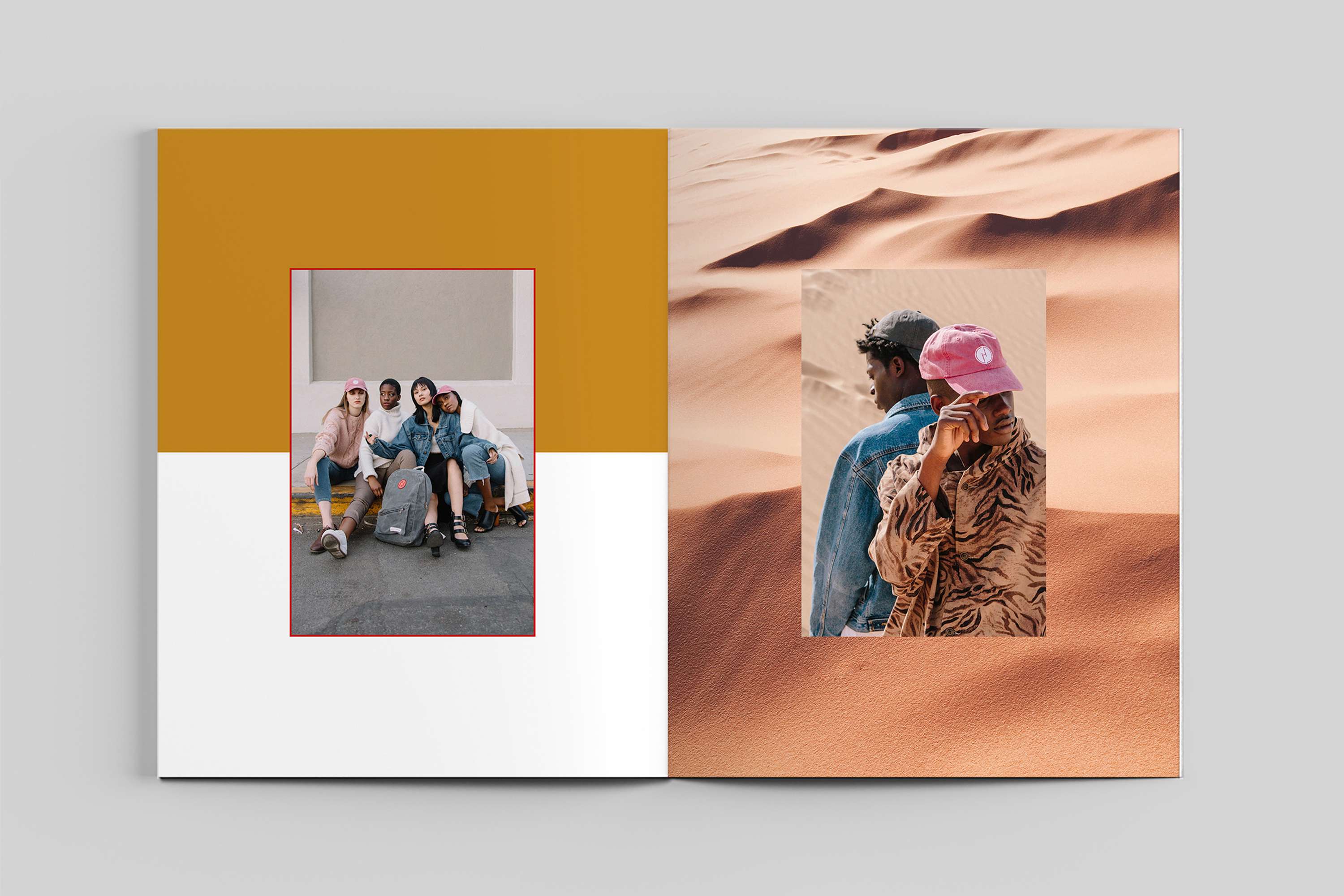
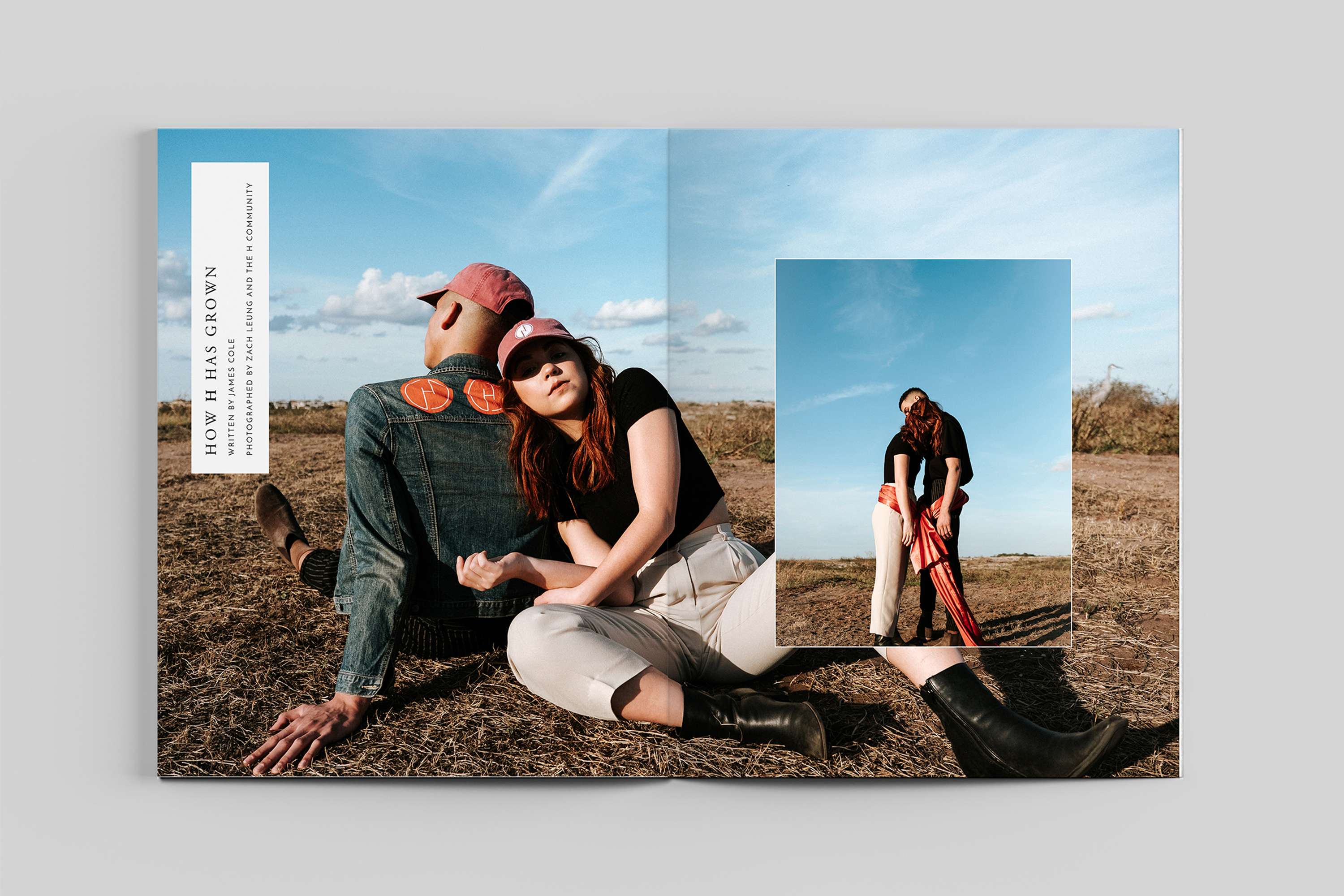
To do this, my idea for a tangible presentation is to create a "magazine" with photos of the "editorial" type shots of still life and portraits that as I choose. I might end up adding text to the photos or even painting over them, but I am not certain if it would add or take away from the end result. I would add text of quotes of the model and how they were feeling in that moment when I took the photo, or I would paint over certain parts of the photo to draw emphasis to the individual.


Image result for redline magazine the H collective

Image result for redline magazine the h collective

Hub1.jpg
inspiration images of final product 


Another idea is to do a simple photo book, as I think that going along the lines of editorial style photos would convey the "picturesque" look in a better way than anything else. I would either get one made by ordering online, or make my own (DIY). As I continue to shoot, I am going to focus more on working with directing shots rather than taking photos in a certain moment. Below are the photos I took already that I am basing my theme off of:


Monday, October 29, 2018

Photographer: Jimmy Marble

Photographer for Oral Presentation

For the presentation on a photographer, I have chosen:

Jimmy Marble, an American visual artist, film director, and photographer.


Monday, October 22, 2018

Lighting

Lighting.


Part A.
"Hard"
Aperture: f/1.4 ISO: 800 SS:1/250


"Soft"
Aperture: f/1.4 ISO: 3200 SS: 1/80


Part B. 


Front
Aperture: f/1.4 ISO: 1600 SS: 1/400

Side
Aperture: f/1.4 ISO: 1600 SS: 1/160


Behind:
Aperture: f/1.4 ISO: 1600 SS: 1/160


Above
Aperture: f/1.4 ISO: 1600 SS: 1/125


Below
Aperture: f/1.4 ISO: 1600 SS: 1/160


Monday, October 15, 2018

Composition

Composition. 

Line
Aperture:
f/5.6 ISO: 3200 SS: 1/320


Shape
Aperture: f/5.6 ISO: 1600 SS: 1/400


Repetition
Aperture:
f/1.4 ISO: 400 SS:1/5000

Contrast
Aperture:
f/4.5 ISO: 3200 SS:1/6000


Texture
Aperture:
f/4.5 ISO: 400 SS: 1/640


Rule of Thirds
Aperture:
4.0 ISO: 800 SS: 1/400


Complementary Color
Aperture:
f/4.0 ISO: 6400 SS: 1/340

Analogous Color
Aperture:
f/5.6 ISO: 6400 SS: 1/320


Exhibition Review

Exhibition Review

Photography Exhibition Review: Ryan McGinley’s “Mirror, Mirror”. 

Team Gallery at 83 Grand Street, New York, NY. 

            In review of the recent photography exhibition at Team Gallery, photographer Ryan McGinley presents his work, “Mirror, Mirror”, in an attempt to showcase a project involving mirrors, and the self. His subjects include people, ranging in ages 19 to 87, each who portrayed a wide range of skin tones and shapes. According to the press release, the subjects were given a set of mirrors, rolls of 35 mm film, a point and shoot camera, and a set of instructions to take the self-portraits. Ryan McGinley himself did not shoot the photos, but he chose which images to include as a representation of a greater underlying meaning for a more instructional project. 

The gallery venue was located in downtown East Village, in a small studio space called Team Gallery. He presented around 20 different photographs, self-portraits to be exact, and each taken with a 35mm film camera. These were presented on canvas, of 27 x 40 inches. In an a very minimalist fashion, the focus of the exhibit was strictly the images. The photographs were presented in rows and columns on three of the four surrounding walls in the studio. No descriptions, no titles– just the images. There did not seem to be any distinguishable reason for the placement/grouping of each photograph (per wall), though the featured photos were located on the back wall of the room. 

As a group, the subject matter of the photographs consisted of individuals, one or more mirrors, and the film camera, though the background of each photo was different. The content what was shown in the mirror was determined by the individual themselves. Much like the subject matter, the form of each photograph depended entirely on the individual. Some used only one mirror, others used multiples. Other photos had more than one person in them. The interiors of the project also stood out to me and distinguished one from another. The photos were very intimate, personal, and almost invasive (in the best way possible). It was like looking into that person’s life– their apartment, their meaningful possessions, etc. 

Though taken by different people, the overall style of the photographs was much the same. This could be a direct result of Ryan McGinley choosing the photos himself. Due to the restriction in composition of the photograph, the individuality of each person shined through, but kept most of the “content” the same– the person in their bedroom with a mirror, naked. The internal context of each photo was very intimate. In order to fully understand the meaning of this project, I had to look at the press release, as well as the website for the exhibit. The overall goal of this project was to promote body positivity, as mirrors sometimes do not. It also implied how image culture influences how we see ourselves and the world. The instructional aspect of the prompts also allowed creative playfulness and interpretation. 

A particular image from the show did, in fact, stand out to me. The image was entitled “Carlotta, 2018”. It was of model Carlotta Kohl, who, like the rest was sat in her apartment. However, her choice in the use of the mirror was unlike the rest of them. Instead of showing her reflection, she positioned the mirror away from her, using another mirror to capture her body on the bed. The reflection did not show her, but the remainder of her bedroom, like an open vessel. It covered her stomach, and her body was “halved”, or separated. It was different, not seeing a reflection of a person in the mirror. I did not necessarily feel a personal connection with the image, just noticed that it was quite different than the rest.

In response to the exhibition, my overall feelings towards the photographer, Ryan McGinley, is positive. I had been following his work for the past two years, though I had never been to one of his shows nor have I read external information on him or his work before. This assignment allowed me to critically analyze the work of a photographer in a real gallery setting. I like the aspect of using mirrors in photographs, because for me, it allows the viewer to almost see a greater depth than what is actually present.  

References

http://famedriver.com, Fame Driver. “Mirror, Mirror.” Ryan McGinley : Mirror, Mirror, Team 
(Gallery Inc.), 2018, www.teamgal.com/exhibitions/391/mirror_mirror.